
Going beyond perfection: Insights on SATIS 2026 in Paris by Sandy Semelin, AI Production Lead
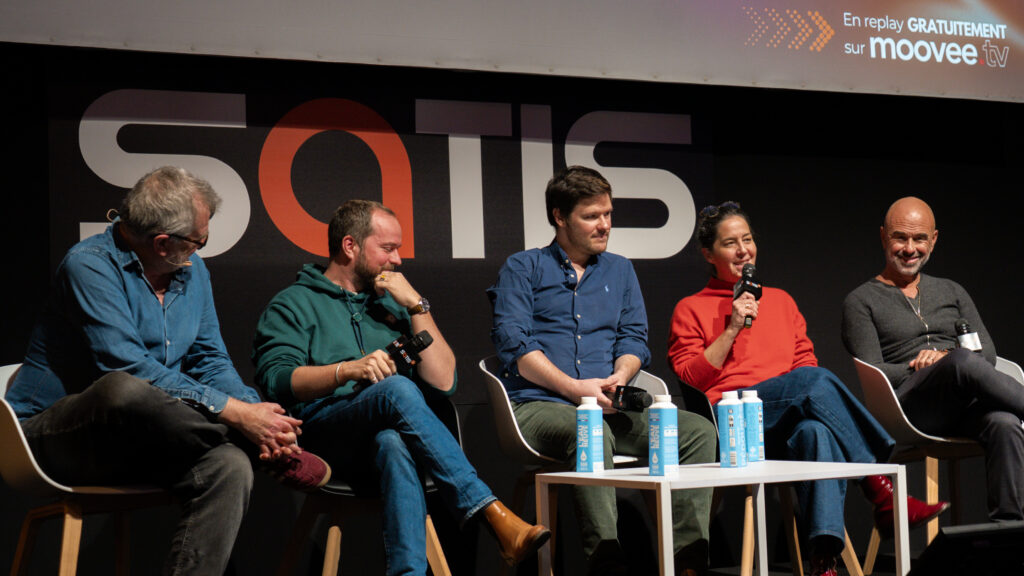
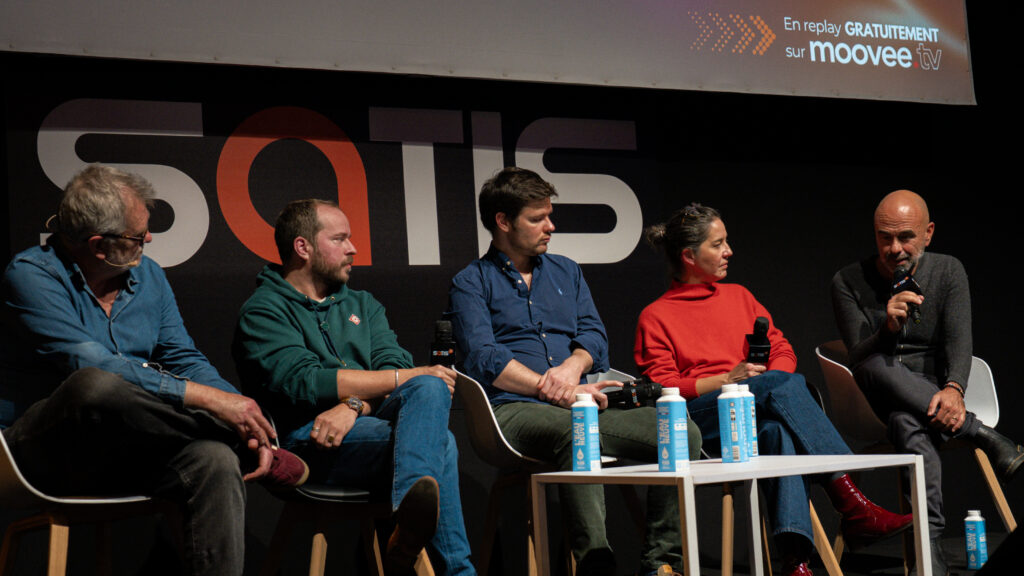
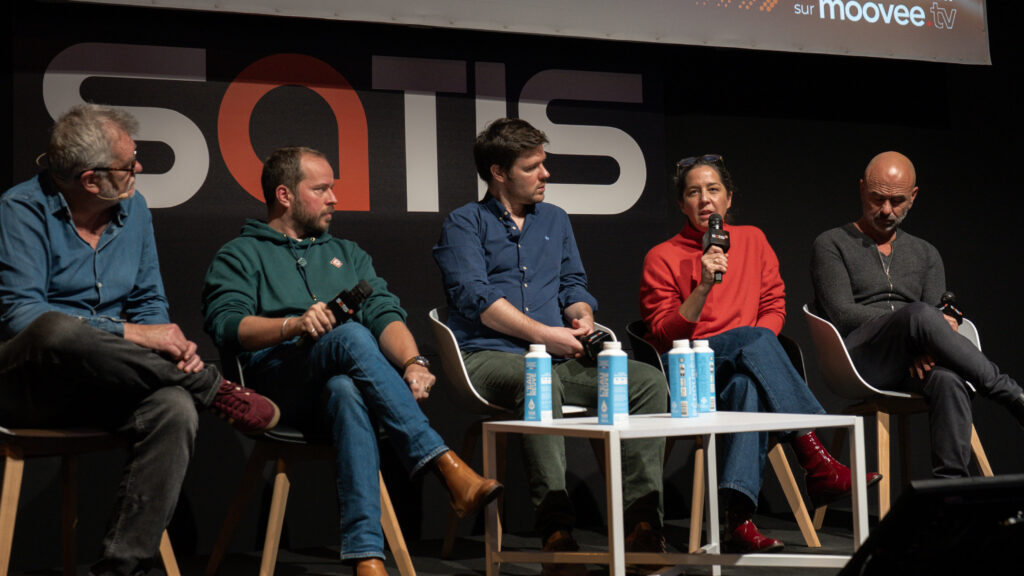
AI can generate the perfect image — but it needs to create an emotional connection with an audience, too. At SATIS 2026, the conversations centered around this very challenge. On November 5th at Docks de Paris in Aubervilliers, Jean-Yves Le Moine, generalmotion.ai’s Head of Production, moderated “Cinema and advertising AI: the perfection trap”. This dialogue with industry leaders included Sandy Semelin, POP’s own AI Production Lead at POP France, alongside Marc Horgues-Debat of OKCC Agency, Alex Peron of Narrative Coders, and management consultant Frederic Monnereau.
In front of an audience of audiovisual professionals, film students, and curious creatives, the panel had an open, lively exchange on how AI is reshaping production, the evolving role of creatives, and the emotional contract between a story and its audience. Sandy got the scoop on the ideas and insights that emerged — and why human craft still makes all the difference.

Will AI replace human talent?
It’s the question everyone is asking — including the panelists in this discussion. The truth is, one person can’t replace a whole production team without losing quality and singularity. A shoot involving dozens of people can’t simply be handed to a crew of one — and AI doesn’t change that. It can, however, redistribute roles and create new ones. AI changes roles, not the need for a team of human talent.
“Like any artistic medium, AI is worth what the hand behind it is worth,” says Sandy. “The director behind any project remains — whatever the medium.”
It might not necessarily be a director in the classic sense, but every project needs a creator to understand the format, lead the narrative, and plan the shot list. Senior generalists are in high demand, but they need teams around them.
Following that, roles as we know them are shifting. One central example: the art director. As the link between agency and production, the AD gives direction, delivers highly finished mock-ups, and can even take part in producing a campaign.
“With AI, generating is easy,” says Sandy. “We still need expertise, because knowing which variation has a soul is a craft.”
The speakers agreed that the shift to AI is felt at every level of creation. After the panel, several discussions were with “traditional” artists — including directors, graphic artists, aspiring post-production artists — who felt they need to pivot, and earnestly wanted to know how. It wasn’t just creatives, either: non-artists are asking too, including producers and production managers. They want to understand where their job is heading, and how to pivot while still finding meaning in their work.
If doubt turns people off, what keeps them engaged?
The answer: narrative and trust. The core of the insight here is that storytelling always has to come first. A good narrative is central and essential to good content. Viewers don’t drop off because an image is fake. They drop off when the story stops holding them and they start seeing the seams.
The more AI makes production abundant, the more scarcity shifts to attention, singularity, and trust. We need to respect the emotional contract we have with the audience. To create empathy, content has to stand out. Advertising has always embraced the unreal. With very little time on screen, the challenge is to make the intention readable fast.
“The ‘AI or not AI’ debate clouds judgement,” says Sandy. “Do viewers simply not want to see AI? The topic currently pollutes many discussions: sometimes the AI label alone makes people judge subjectively rather than objectively.”
Leaning into hybrid craft
One of the highlights of the conversation centered around hybridization as the way to move forward. Bringing in traditional elements, adapted to what AI handles more or less well, is a series of decisions. Some are about control, but above all they are artistic: a 3D playblast used as an AI input needs the right composition to generate the right image. That is artistic work.
The panelists agreed that the strongest results come from combining tailor-made inputs — capture, illustration, 3D or photography — with human skill, AI and the right tools. Real talent brings truthful emotion, comedy and physicality to the work.
“Post-production, classic or AI-augmented, adds a layer of craft and feeds our obsession with detail,” says Sandy. “Grain isn’t a style you apply — it’s a result you defend with a production strategy.”
Maintaining a human touch at every level with hybridization means that all imperfection is an organizational choice. We need to protect the time it takes to choose — and to give that choice to a human.
“The real risk lies in the process: deadlines push for ‘good enough,’ and no one has time to really look,” says Sandy. “That’s why we defend a price for AI that includes the human teams behind it.”
AI doesn’t take imperfection away from us — it forces us to steer and to choose the imperfection we will accept.
Production strategy: AI changes the tools, not the mission
The agency’s value hasn’t changed: we want to make campaigns that stand out. That means avoiding slop, but also being strong strategically and creatively, with flawless craft in service of ideas. To stand out, you need the courage to defend an intention.
Speed can blur decision-making. When everything moves faster, there’s less time to look, compare and decide. Scale needs to be done with thoughtfulness at every step — which is why we need to build AI literacy at every level, for both clients and teams.
“The key is to talk early, so craft is steered to serve the idea,” advises Sandy. “Be open about what is easy in AI and what isn’t. Some things can go fully AI. Others need to be reworked to be made in AI, or the result will introduce doubt, contain errors, and just plain look bad.”
This is where production strategy and organization come in. At the brief stage, we need to tell what AI can do, what it can’t, and what will need to rely on traditional techniques. Then, our teams decide how to use those techniques: exactly as before, or adapted to how AI reacts to specific inputs. At POP, this analysis is baked into the production strategy process.
Moving forward: Technology that serves ideas
The panel at SATIS 2026 made it clear that the central question of the industry is no longer whether AI belongs in production — it’s how to use AI without losing sight of what makes a piece worth watching. Because while AI is changing how campaigns are made, it hasn’t changed what makes them matter: a clear point of view, a story that holds attention, and craft that earns the audience’s trust. That means bringing creative and production teams into the conversation early, choosing the right mix of techniques, and making space for discerning judgement that turns endless possibilities into a clear point of view.
Want more POP insights in your life? Check out our Instagram and LinkedIn and never miss a thing.
Comments are closed.