
Humans of POP: Ivan Merga, Head of Digital, UK
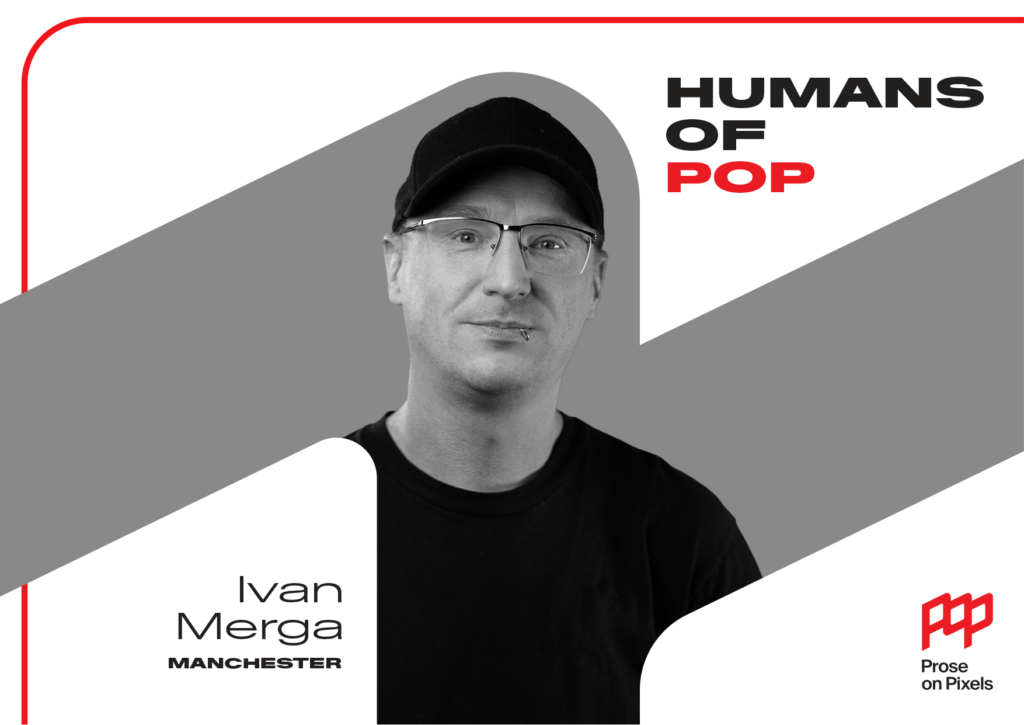
Ivan Merga, our Head of Digital at POP UK, cultivated a passion for understanding systems and user experience early on, studying Games Design and working in the gaming industry for years. “It wasn’t just about making games — it was about systems, user experience, logic, and storytelling,” he says. This journey gave him a unique perspective, one that blends creativity with technical thinking.
And that’s the mindset he brought to POP. In his role, Ivan orchestrates digital workstreams, manages development teams, and acts as a product owner for key tools like the IVA Builder, all while supporting agile delivery across our global studios. At work, his days are a dynamic mix of strategic thinking, hands-on problem-solving and exploring new technologies; at home, he applies those same skills to home automation and video gaming.
Discover how his background has shaped his innovative approach to digital challenges at POP — and to find out his favorite video game of all time (hint: it’s a classic!).
A bit about your story: where were you born, where did you live most of your life, and what/where did you study?
I was born in Bolton and grew up in the nearby town of Horwich. In early adulthood, I moved to Royal Leamington Spa in the Midlands, before eventually returning to Horwich.
I initially studied ‘Games and Software Development’ at university but two years in I converted to the more creative ‘Games Design’, which combined creativity and technical thinking in a way that really suited me. It wasn’t just about making games — it was about systems, user experience, logic, and storytelling. That mindset has stayed with me throughout my career.
What is your role at POP? What does a typical day look like for you?
I’m the Head of Digital at Prose on Pixels UK. My role sits across digital production, development, and involves an element of business analysis. I lead our digital workstreams, manage developers and QA, and act as product owner for our IVA Builder tool. I also support agile delivery on other projects within our global studios to align ways of working.
A typical day is a mix of strategic thinking and hands-on problem solving. I might be:
- Running sprint ceremonies,
- Reviewing requirements and turning them into actionable roadmaps,
- Exploring new technology that could improve a congress build,
- Mentoring team members,
- Or aligning stakeholders around digital priorities.
No two days are the same — which is exactly what I enjoy about it.
What is your favourite recent project you’ve worked on at POP?
One of my favourite recent projects has been evolving the IVA Builder tool and improving how it supports global teams. It’s rewarding because it’s not just a single client delivery — it’s something that improves the way we operate as a network.
I particularly enjoy the intersection of product thinking and real-world usage: gathering requirements from studios, translating them into features, forecasting delivery, and then seeing teams actually benefit from those improvements. That full lifecycle — from idea to impact — is something I find incredibly motivating. Internal investment projects like this allow both me and the team to explore new technologies and ways of working that we can then implement in other projects throughout the business.
You previously worked in the video game industry as a QA technician and received a degree in Games Design. How did your passion for video games start, and what was your favourite project you worked on as a QA technician?
My passion started like it does for many people — playing games as a kid. But what really hooked me was understanding how they worked. I was fascinated by mechanics, systems, and how player choices triggered reactions.
Working as a QA technician was eye-opening. QA isn’t just about “finding bugs” — it’s about thinking like a player and like a developer at the same time. You learn to break systems, anticipate edge cases, and understand how small changes ripple through complex environments.
My favourite projects were always the ones where QA was integrated early and treated as part of the creative process. That collaboration between design, development, and testing taught me how powerful cross-functional teamwork can be but if I had to pin it down to a particular title it would be Colin McRae Dirt 2.
What similarities do you see between the creative problem-solving process in gaming and the audience-first production world of POP?
The biggest similarity is systems thinking.
In games, you’re constantly asking:
- How does this mechanic affect the player experience?
- What happens if the player does something unexpected?
- Is this intuitive, or does it create friction?
At POP, it’s similar — but instead of players, we think about audiences. How will users interact with this content? Is the journey seamless? Does the technology enable or interrupt the experience?
Both worlds require balancing creativity with logic. You need imagination — but you also need structure, scalability, and rigorous testing. That mindset has carried directly from gaming into digital production.
You’ve also have an interest in home automation. What excites you about that, and what does that look like for you personally?
Home automation appeals to me for the same reason digital production does: optimization and systems.
I enjoy creating environments where technology works quietly in the background to remove friction — whether that’s automated lighting, energy efficiency, or connected systems that talk to each other. It’s essentially a personal sandbox for experimentation.
It also reinforces a mindset of continuous improvement. There’s always a smarter way to connect things, refine processes, or remove inefficiencies — whether at home or at work.
Are there aspects of your personal interests and hobbies that have changed the way you approach your work?
Definitely. Gaming and automation have both influenced how I think about user experience, scalability, and failure points.
I naturally look for edge cases. I ask, “What breaks this?” and “What happens at scale?” That mindset is invaluable in digital production — especially when managing tools, workflows, or multi-studio builds.
They’ve also made me comfortable experimenting. Not every idea works, but iteration is where innovation happens.
How do you think embracing creativity — in any form — can influence innovation in the workplace?
Creativity isn’t just artistic — it’s structural.
Innovation often comes from asking: “What if we did this differently?” When teams feel empowered to experiment — even in small ways — you get better processes, better tools, and better solutions.
At POP, blending creative thinking with technical rigor is what drives meaningful digital solutions. Creativity opens the door; structure makes it scalable.
Can you share a moment when you stepped outside your comfort zone and it paid off?
Moving from QA into leadership and product ownership was a big shift. QA is analytical and detail-focused. Leadership requires vision, communication, and influencing across teams.
Early on, stepping into rooms with senior stakeholders and translating technical complexity into business language felt uncomfortable. But developing that skill has been one of the most valuable parts of my career. It’s allowed me to bridge the gap between technology and strategy — which is core to my role today.
How has the digital landscape changed over the course of your career?
The pace has accelerated dramatically.
When I started, digital projects were often linear and siloed. Now, they’re iterative, data-driven, and deeply integrated across platforms. Agile methodologies have become essential, and scalability is expected, not optional. That’s before you bring AI into the mix — a rapidly developing technology that is so powerful but can also be oversold. The challenge here is implementing the technology while also setting expectations.
There’s also been a shift toward audience-centric thinking. It’s not just about delivering content — it’s about delivering the right experience at the right time.
What digital trends or technologies do you think will reshape production in the coming years, and how will they do it?
AI-assisted development and automation will significantly reshape production — especially in content scaling, personalization, and QA.
We’ll also see more intelligent tool ecosystems — platforms that integrate more seamlessly across global teams, reducing duplication and inefficiencies.
The key won’t just be adopting new technologies — it will be integrating them thoughtfully into workflows, so they genuinely enhance creativity and output quality.
Quick Ones:
Favourite video game?
Tetris. Maybe because this was one of the first games I ever played but also the puzzle element, the creative design, the replay ability of the title is unmatched.
What’s one tool, habit, or system that helps you stay organized or creative?
Structured sprint planning combined with personal task batching. I believe creativity thrives within well-designed constraints. I believe this is something that I’ve directly learnt from video game development; within that realm the whole world of developers are given a machines to make games on for around 4 years, the machine is never going to get more powerful so to make your game, your product, stand out you needed to be creative.
Best advice you’ve received, or piece of advice you wish you’d received earlier in your career?
“Don’t just solve the problem in front of you — understand the system that created it.” Early in my career, I focused heavily on fixing issues or simply reporting them and allowing them to be someone else’s problem. Over time, I’ve learned that the real impact comes from improving the underlying process. That mindset shift — from reactive to systemic — has shaped how I lead today.
Humans of POP is our storytelling series, created to shine a light on the people making it all happen behind the scenes. Our people are at the heart of everything we do — and this series is all about hearing from them directly. Across continents and cultures, these stories remind us how much we can learn from those around us.
Comments are closed.